Project Description
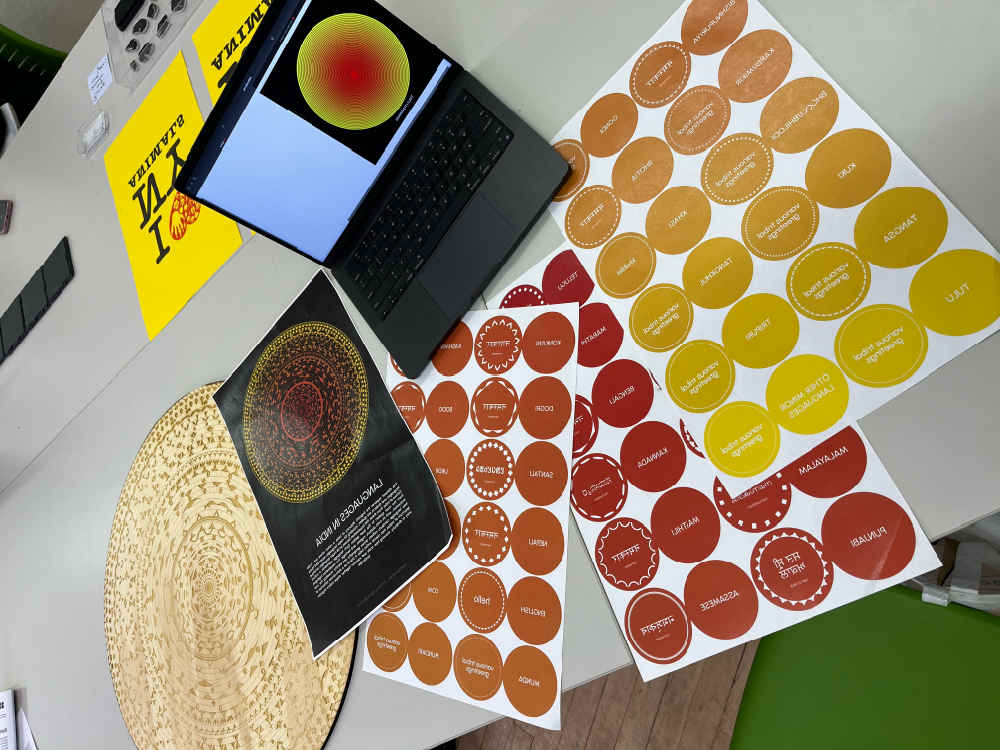
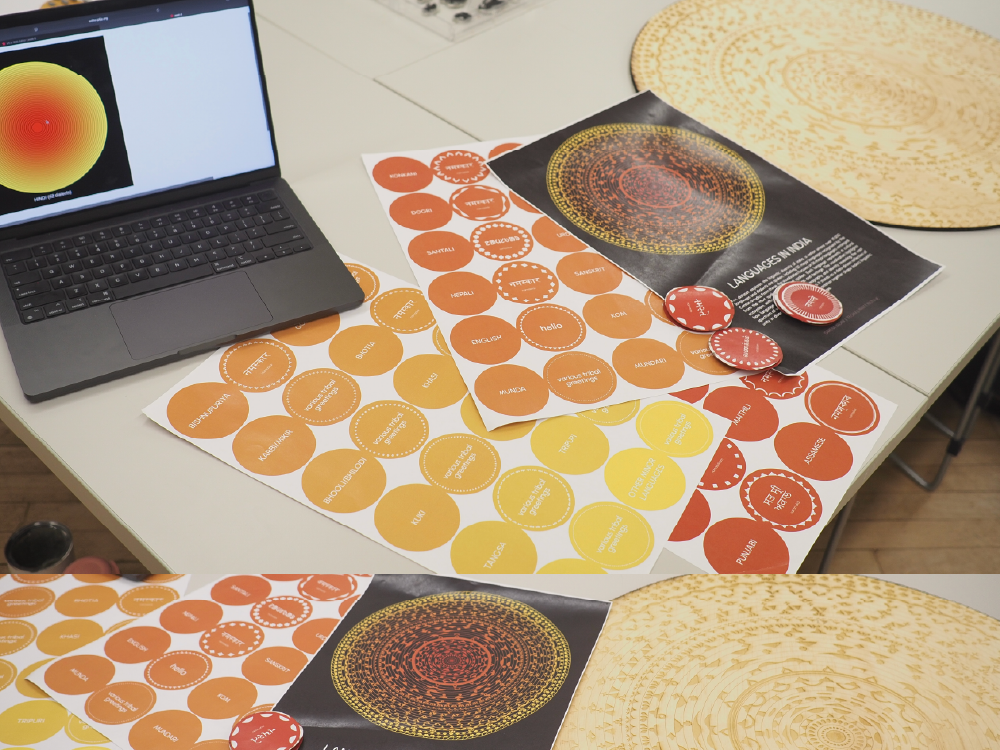
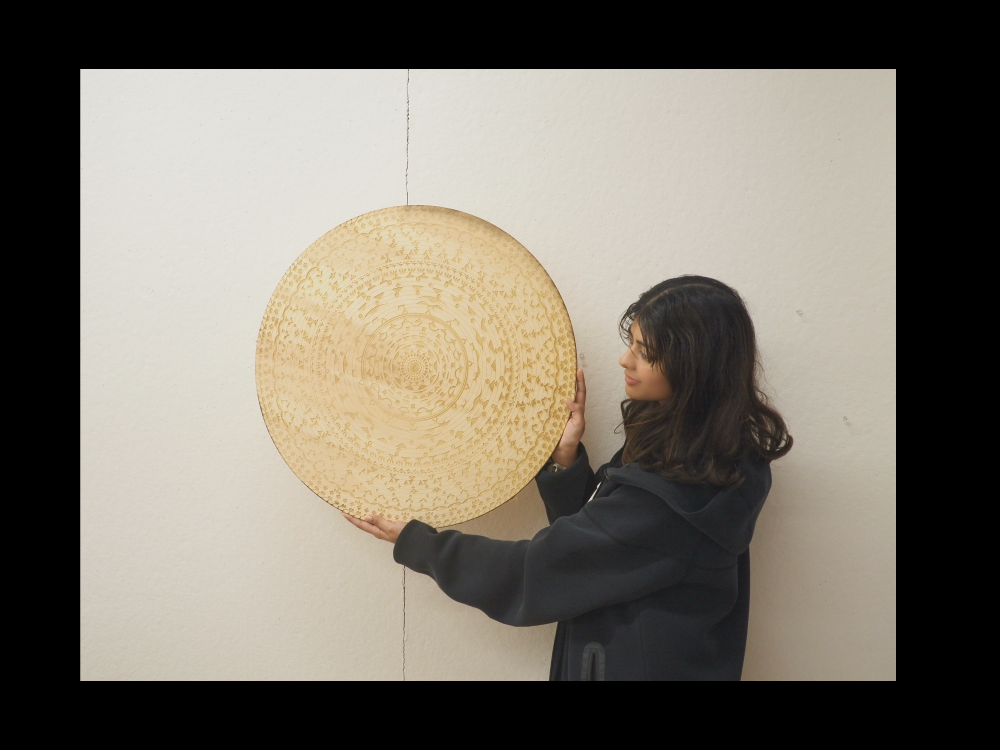
For my data sculpture project, I worked with a dataset on Indian languages, focusing on 36 major languages arranged from the most spoken to the least. After cleaning, filtering, and organizing the data, I identified clear patterns: some languages have millions of speakers and dozens of dialects, while others are smaller yet culturally significant. This process helped me clarify my narrative revealing India’s linguistic richness and the relationships between language, region, and identity. To translate this dataset into both a digital and physical form, I conceptualized my system through a mandala, a structure that naturally communicates hierarchy, balance, and interconnectedness. The inputs in my system were ordinal (speaker count), nominal (color and pattern), and discrete (a finite set of languages). The outputs became visual attributes: orientation, size, shape, color hue, and repetition. Each of the 36 languages was assigned a unique shape, and the number of dialects within that language determined how many times that shape was repeated around the mandala. Some shapes appeared only a few times, while others repeated many times—creating a rhythmic pattern directly tied to the dataset. To bring this to life physically, I laser-cut the shapes out of wood, layering and arranging them radially to form a full mandala. The physical material adds warmth and permanence, while the repetition of shapes captures the scale and diversity embedded in the data. The legends are incorporated directly into the piece using etched symbols and color cues, rather than separate printed sheets. This keeps the sculpture self-contained and intuitive, allowing viewers to interpret meaning through embedded visual rules. Overall, this project transformed linguistic data into an expressive structure showing how 36 languages and their dialects unite into one coherent, culturally rich mandala that mirrors India’s vast, interconnected linguistic landscape.