From Fixed Design to Variable Code
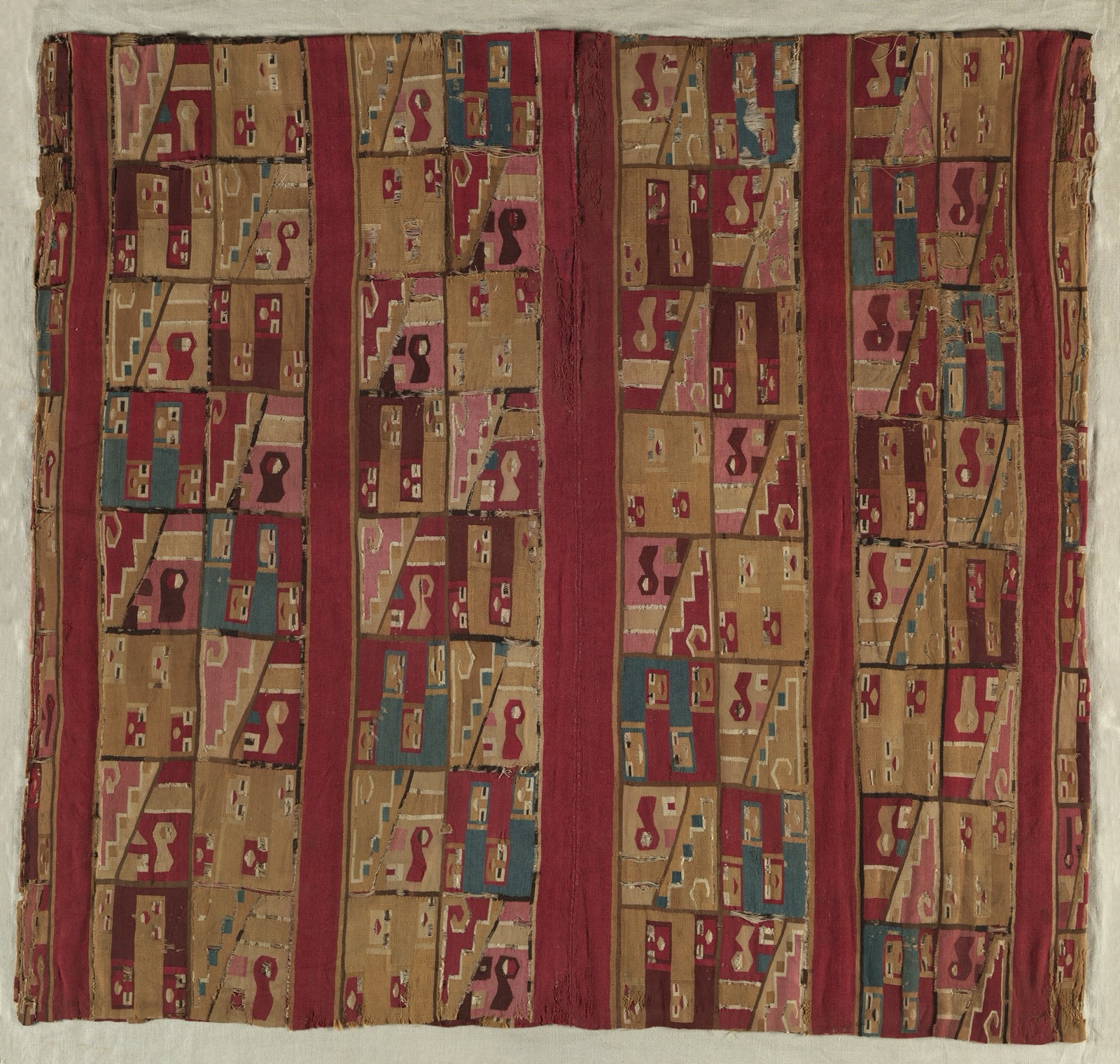
Wari culture, Tunic.
Since the invention of the first tools, designers and technology have
evolved together in a dynamic, reciprocal relationship. From movable
type and mechanical presses to desktop publishing, and now computational
tools and digital fabrication, designers have continually adapted to new
languages and tools while simultaneously shaping and redefining those
technologies to expand what’s possible in communication.
However, code is not a uniquely Western, nor a uniquely digital,
concept. From ancient weaving patterns and early musical notation to the
ciphers that have protected secrets throughout history, humanity has
always used systems of logic to encode and communicate meaning.
As we move from historical manual systems to computational ones, the
need for rigid, fixed-plate production has diminished. We now work
directly with digital values and variables, enabling designs that are as
adaptable as the systems that generate them. This shift allows us to
move beyond one-size-fits-all solutions and build flexible, responsive
systems that mirror the complexity of the information we translate.
In this unit, you will explore foundational computational concepts such
as variables, randomness, loops, and functions that empower and
challenge you as a designer. Moving beyond fixed, perfect proportions,
you will learn to design “programs” that create, break, and modularize
rules to generate flexible, dynamic systems. Throughout the making
process, we will reflect on the evolving role of the designer in an
increasingly digital and automated world.
Project 1: Creative Cryptography
Submit Project 1 View All Projects
As designers, we constantly participate in cycles of encoding, decoding,
and translating messages through the tools at our disposal. Begin with
something personally, poetically, or culturally meaningful to you: a
piece of text, an image, sound, a natural or physical object or system,
an experience, or another source. You will not present this source
directly. Instead, you will transform it by designing a visual coding
language that encodes its content into form.
You are not creating a single composition, but a system of translation.
Define a set of rules that maps elements of your source into visual,
spatial, or material components. The source becomes something that
generates form rather than something simply displayed. Your system
should be consistent and repeatable, yet flexible enough to apply to
other sources and produce new variations while maintaining its
underlying logic.
By transforming language into code, you make decisions about what is
revealed, what is hidden, and how meaning travels across different
media. Your system might obscure legibility, delay comprehension, or
create new forms of reading. It may function as a private language,
hidden writing, a shared code, or something in between.
Using your system, produce a big Inkjet wide frame that's 24” x 36” for
each person. Consider the layout carefully to ensure that your encoded
language is effectively communicated through the visual composition.
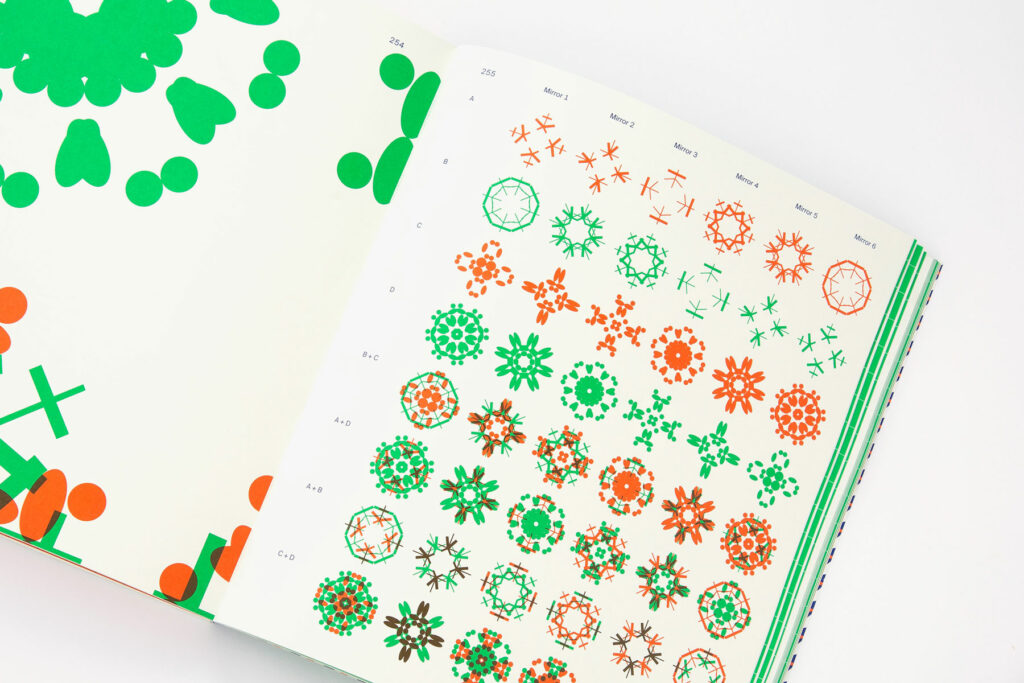
Martin Lorenz, Flexible Visual Systems.